UNIVERSITY OF ÉVORA PROMOTES CONNECTION BETWEEN RESEARCH AND THE NATURAL STONE INDUSTRY
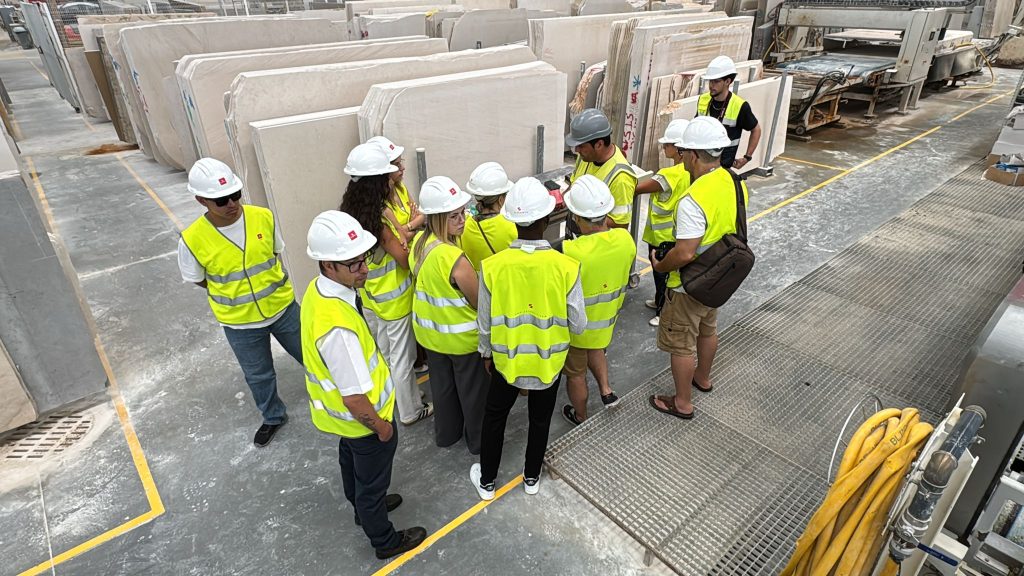
Between June 30th and July 1st, the University of Évora promoted the “Workshop in Progress” initiative for master’s and doctoral students in the field of mineral resources, as part of the Sustainable Stone by Portugal Agenda, funded by PRR – Recover Portugal. With technical visits to the companies SOLANCIS, JULIPEDRA, LSI STONE and FRAVIZEL, members of the Agenda consortium, as well as a visit to the Vale de Meios Dinosaur Footprints, the purpose of this initiative was to promote the industry, give visibility to what has been developed, closely monitor processes in the sector in terms of sustainability, innovation and digitalization, and bring academia closer to the natural stone industry. As well as opening the doors of the industry to the gaze of those who research and learn, this action contributed to valuing the sector, highlighting its challenges, advances and commitment to the green and digital transition.
POSITION OF THE PORTUGAL MINERAL RESOURCES CLUSTER ON THE LAGOA SALGADA PROJECT
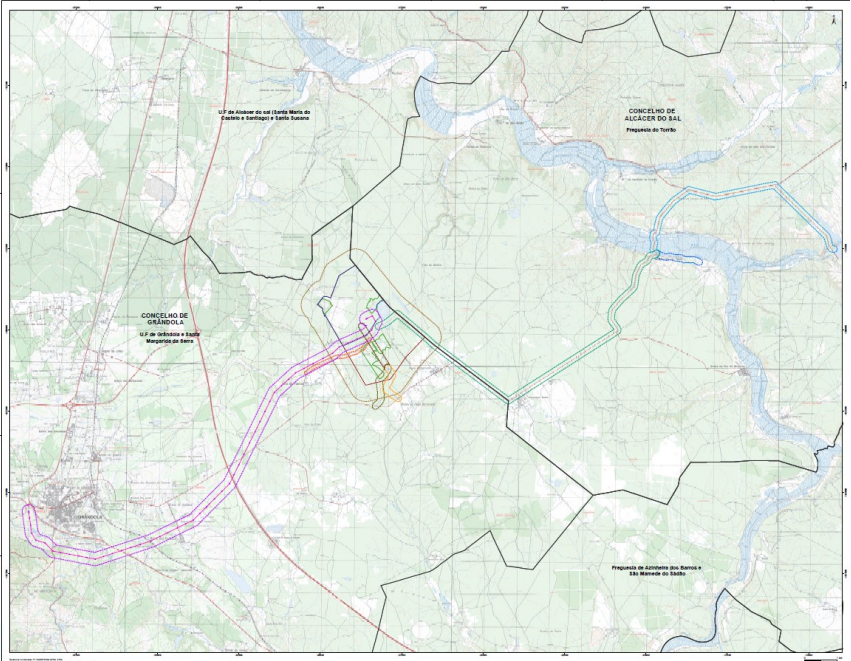
The Portugal Mineral Resources Cluster endorses the information note published on 17 June by the Portuguese Association of Geologists regarding the Lagoa Salgada mining project in Grândola. This project, developed by the Canada-based company Redcorp/Ascendant, is a large-scale mining venture and represents a strategic opportunity to strengthen Portugal’s role as a supplier of critical and strategic raw materials for the European Union, in line with the EU Critical Raw Materials Act. Located near Grândola, in the Iberian Pyrite Belt, the massive sulphide deposit was discovered in 1992 and lies beneath more than 125 metres of sediment. It will be mined via underground operations, with ramp access and a mineral processing method similar to those used at the Neves-Corvo and Aljustrel mines, though adapted to the specific characteristics of this deposit. To ensure the economic viability of the project, it is essential to add value to the metals found in the upper zones of the deposit, namely gold and silver, which have significant grades and commercial relevance. Gold recovery will use the cyanide leaching technique — widely recognised as the most effective method globally for this type of ore. While legitimate concerns are often raised about cyanide’s toxicity — and amplified in public and media debates — it is important to note that this technique is widely used in technologically advanced countries such as Australia, where it is applied effectively and with proven environmental safety. Historical evidence shows that, when used in a closed circuit, accidents with significant environmental impact are extremely rare, with fewer than twenty recorded cases since the 19th century. Moreover, cyanide is extensively used across several industrial value chains, including agriculture (pest control, grain preservation), plastics, photography, adhesives, jewellery and fashion accessories — areas where it does not typically raise substantial public opposition. Despite the complexity of the project and the challenges associated with ensuring its economic feasibility while fully complying with national and European environmental legislation, Redcorp/Ascendant has, since 2008, demonstrated a commitment to economic, environmental and social excellence. Over €32 million has been invested in this effort, supporting the creation of direct and indirect employment at both local and regional levels. The company has maintained close engagement with local stakeholders, encouraging informed participation and ensuring environmentally responsible operations aligned with international best practices. Given the State’s initial involvement in the discovery of this deposit, it would be desirable for current regulatory conditions to allow the continued evaluation and development of the project, based on technical dialogue and informed deliberation. The Portugal Mineral Resources Cluster reaffirms its confidence that its member Redcorp/Ascendant is fully prepared to engage in dialogue with the relevant authorities to reach a mutual understanding on the use of cyanide, while ensuring all technical and legal safeguards are in place. As always, the Cluster remains available to provide any additional technical clarifications that may be required. Technical Note – Update on Processing Following the release of the statement, the Portugal Mineral Resources Cluster was informed by its member Redcorp/Ascendant of an important technical update concerning the Lagoa Salgada project. Contrary to what was stated in the initial version of the Environmental Impact Study, the ore processing strategy no longer includes the use of sodium cyanide. After an optimisation phase of the project, based on recent metallurgical testing carried out with the support of Wardell Armstrong International, a new metallurgical approach has been adopted that completely eliminates the use of cyanide. The new processing circuit is based exclusively on conventional polymetallic flotation, enabling the recovery — in a single marketable concentrate — of lead, vanadium, gold and silver. This change brings significant environmental, technical and economic benefits, including: This technical development enhances the sustainability profile of the project, addressing concerns previously associated with cyanide leaching.