ACPMR HIGHLIGHTS THE MINERAL PLATFORM AT THE XX NATIONAL MEETING OF THE COLLEGE OF GEOLOGICAL AND MINING ENGINEERING IN VISEU
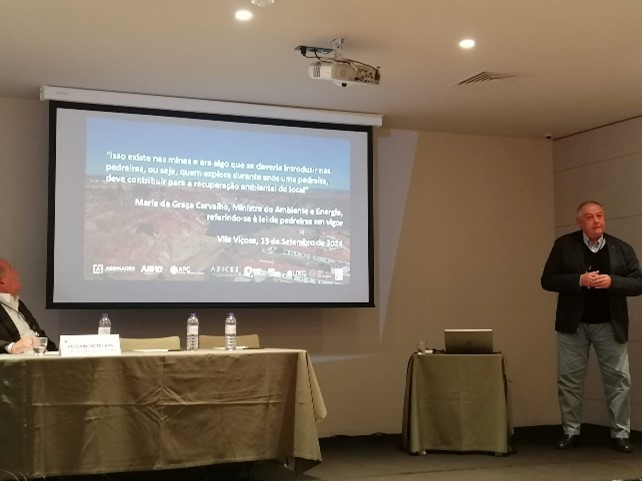
On January 24, Luís Martins, Chairman of the Board of Directors of ACPMR, highlighted the Geological Resources Communication Platform – MINERAL, addressing the impact of resources in the modern world, under the theme “Mineral Platform, Communicate or (not) Communicate, That’s the Question”. The 20th National Meeting of the College of Geological and Mining Engineering: Communication in Geological Resources, with the support of the National Board of the Order of Engineers, began today, January 24, and runs until January 26, in the city of Viseu. This National Meeting is providing its members with the opportunity to reflect on matters of professional interest, in an atmosphere conducive to peer interaction.
ACPMR PROMOTED “MINERALS ARE LIFE” INITIATIVE IN GUIMARÃES
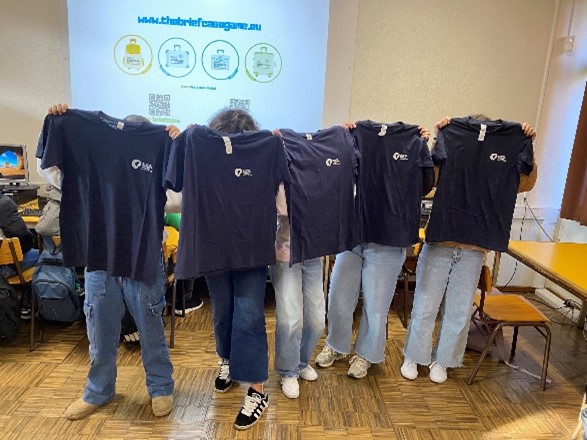
On January 23, ACPMR organized the educational activity “A Mala de Aplicações Minerais” with 80 7th graders from Agrupamento de Escolas de Pevidém, in Pevidém (Guimarães). From the north to the south of the country, ACPMR visits schools to hold educational sessions as part of the “Minerals are life” awareness campaign, where samples are made available and students learn what the products they use every day are made of! During the session, students are made aware of the need for sustainable exploitation and use of mineral resources, and each session ends with an educational game in which the winning teams receive prizes. This game is funded by the European Union.
STEP OPEN DAYS EVENT
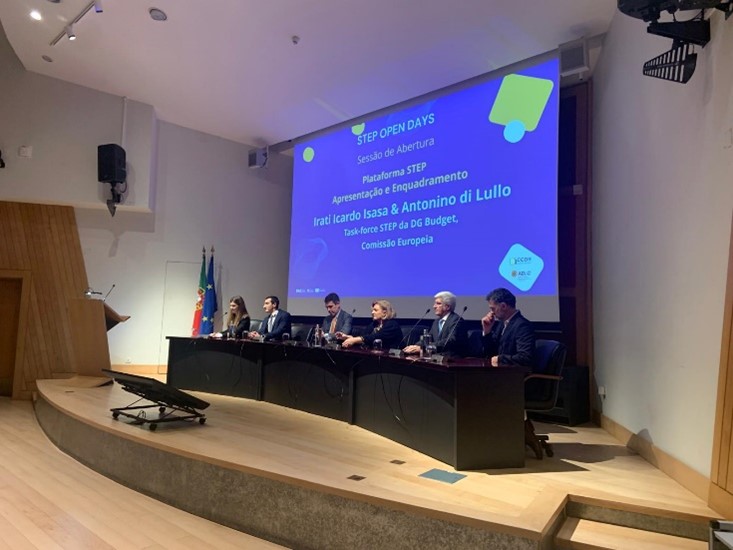
As part of the STEP Platform, the Mineral Resources Cluster, represented by Marta Peres, took part on January 20 in the event organized by CCDR Alentejo and DGEG – Directorate-General for Energy and Geology, on the panel 2- Clean and Efficient Technologies for a Sustainable Future. Marta Peres, Executive Director of the Mineral Resources Cluster, addressed the diversification of strategies for a safe and sustainable future for critical raw materials and highlighted the importance of the European Critical Raw Materials Act for these strategies. She also pointed out that, in Portugal, the Mineral Resources Sector is incorporating green and clean technologies and the various national and European projects have shown efficiency results.
ALMODÔVAR SCHOOL TOOK PART IN THE “MINERALS ARE LIFE” AWARENESS CAMPAIGN
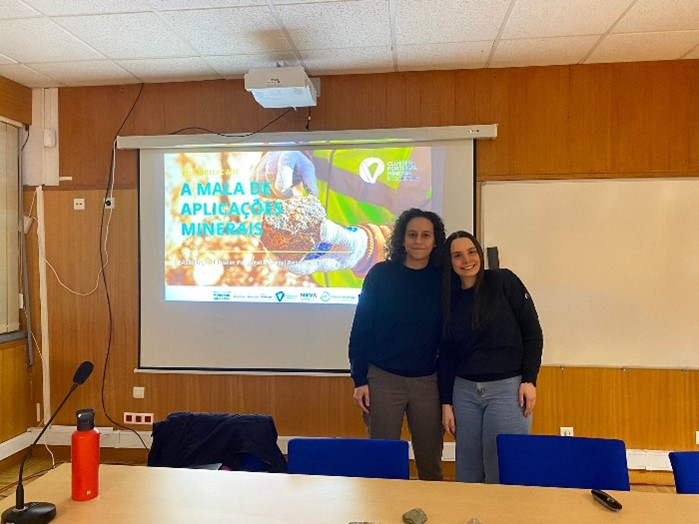
On January 15, ACPMR organized the educational activity “A Mala de Aplicações Minerais” with 40 5th, 7th and 12th grade students from the Almodôvar School Group, in Almodôvar (Beja). From the north to the south of the country, ACPMR visits schools to hold educational sessions as part of the “Minerals are life” awareness campaign, where samples are made available and students learn what the products they use every day are made of! During the session, students are made aware of the need for sustainable exploitation and use of mineral resources, and each session ends with an educational game in which the winning teams receive prizes. This game is funded by the European Union.
STUDENTS IN CRATO ARE SENSITIZED TO THE NEED FOR SUSTAINABLE EXPLORATION AND USE OF MINERAL RESOURCES
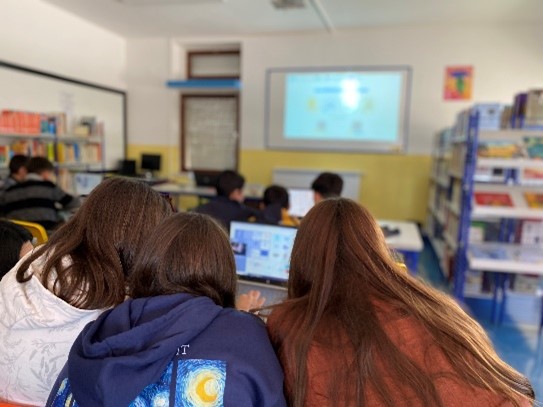
On December 11, ACPMR organized the educational activity “A Mala de Aplicações Minerais” with 50 5th and 7th grade students from the EBI JI Ana Maria Ferreira Gordo, in Crato. From the north to the south of the country, ACPMR visits schools to hold educational sessions as part of the “Minerals are life” awareness campaign, where samples are made available and students learn what the products they use every day are made of! During the session, students are made aware of the need for sustainable exploitation and use of mineral resources, and each session ends with an educational game in which the winning teams receive prizes. This game is funded by the European Union and is part of the Awareness, Communication and Education initiatives carried out by EIT Raw Materials, represented in Portugal by the Department of Earth Sciences at Universidade Nova de Lisboa and Prof. Sofia Barbosa.
ACPMR PARTICIPATES IN RISE PROJECT WORKSHOP AND PITCH SESSION DURING RAW MATERIALS WEEK IN BRUSSELS
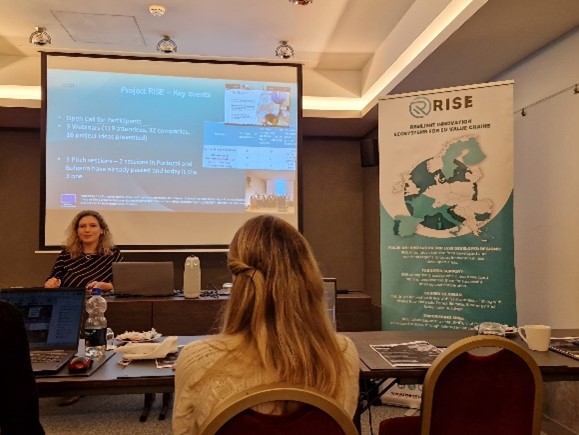
The Mineral Resources Cluster was present as a member of the RISE project consortium at the Workshop and Pitch Session held as a satellite event of Raw Materials Week in Brussels, on December 11 at the Hotel Mariaux. The sessions focused on battery recycling and sustainable mobility. The RISE I3 project aims to accelerate the implementation of innovations and foster cooperation in regions facing economic challenges. RISE’s role is to boost access to strategic investment projects, involving key sectors such as mineral resources, forest biomass and sustainable buildings.
ACPMR AT RAW MATERIALS WEEK IN BRUSSELS
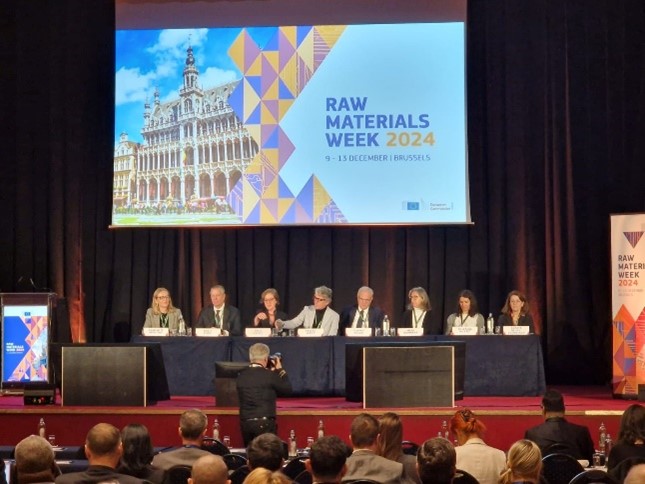
The Mineral Resources Cluster took part in RAW MATERIALS WEEK, organized by the European Commission from 9 to 12 December in Brussels. Today, the theme was dedicated to the importance of the mining industry for the Regions. Portugal was represented by the Secretary of State for Energy, Maria João Pereira, who stressed the importance of the Raw Materials Act and announced that Portugal has already defined 19 measures for its implementation. She stressed that the mining industry should not be seen as a threat, but as an opportunity for Europe’s competitiveness. On the importance of the Regions, António Veiga Simão – CCDR Centro, presented the region’s main challenges and what is being implemented. Rosa Onofre, representing CCDR Alentejo, addressed the importance of land use planning and sustainable management that makes the mining industry compatible with other activities.
SPM THEMATIC SEMINAR: THE IMPACT OF THE CIRCULARITY OF MATERIALS ON VALUE CHAINS
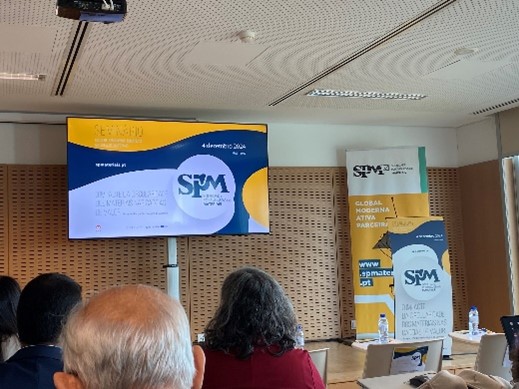
On December 4, ACPMR took part in the Thematic Seminar of the Portuguese Materials Society (SPM), in partnership with CTCV – Center for Technology and Innovation, at iParque in Coimbra. The seminar, dedicated to the circularity of materials and sustainable value chains, featured talks by experts and a visit to the CTCV’s Hypocarbon Laboratory. This seminar was an unmissable opportunity for professionals, researchers and students seeking to better understand the impact of the circular economy on modern industries and how the implementation of sustainable value chains can be a catalyst for innovation and competitiveness.
STUDENTS IN ÉVORA ARE MADE AWARE OF THE NEED FOR SUSTAINABLE EXPLORATION AND USE OF MINERAL RESOURCES
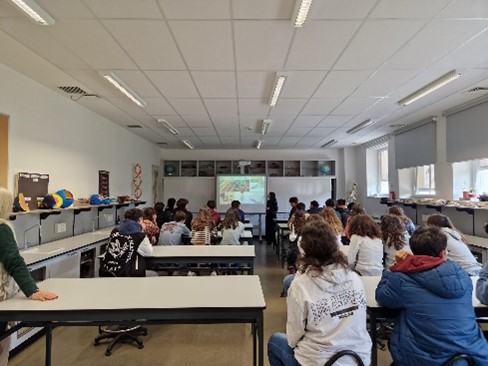
On November 25 and 26, ACPMR organized the educational activity “A Mala de Aplicações Minerais” with 56 10th graders from the Severim de Faria School in Évora. From the north to the south of the country, ACPMR visits schools to hold educational sessions as part of the “Minerals are life” Awareness Campaign, where samples are made available and students learn what the products they use every day are made of! During the session, students are made aware of the need for sustainable exploitation and use of mineral resources, and each session ends with an educational game in which the winning teams receive prizes. This game is funded by the European Union and is part of the Awareness, Communication and Education initiatives carried out by EIT Raw Materials, represented in Portugal by the Department of Earth Sciences at Universidade Nova de Lisboa and Prof. Sofia Barbosa.
ACPMR HELD EDUCATIONAL SESSION ON MINERAL RESOURCES IN MATOSINHOS
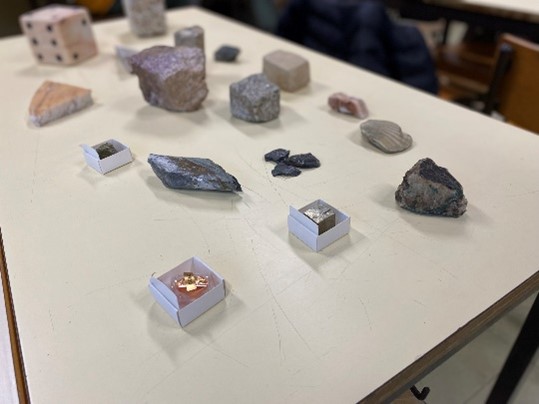
On November 14 and 15, ACPMR went to Matosinhos to hold educational sessions with 140 7th graders from the Maria Manuela de Sá Basic School.From the north to the south of the country, ACPMR visits schools to hold educational sessions in which samples are made available and students learn what the products they use every day are made of! During the presentation, students are made aware of the need for sustainable exploitation and use of mineral resources.Each session ends with the game “The Mineral Applications Suitcase” in which the winning teams receive prizes. This game is funded by the European Union and is part of the Awareness, Communication and Education initiatives carried out by EIT Raw Materials, represented in Portugal by the Department of Earth Sciences at Universidade Nova de Lisboa and Prof. Sofia Barbosa.